

Most articles about video doorbells are written by tech reviewers. This one isn't.
After more than 20 years working in physical security across London — from door work at busy venues to night patrols and CCTV monitoring — I've spent a lot of time thinking about how criminals assess risk. And the honest answer to "what do burglars really think about video doorbells?" is more complicated than the marketing would have you believe.
The short answer: Most burglars — particularly opportunists — are deterred by a visible video doorbell. But experienced criminals know the limitations, and some researchers argue that a smart doorbell can even signal affluence to the wrong people. Here's what the evidence and real-world experience actually says.
Table of Contents
Quick Summary
| Question | Honest Answer |
|---|---|
| Do video doorbells deter burglars? | Usually yes — especially opportunists |
| Does visibility matter? | Yes — hidden cameras have far less effect |
| Can a doorbell attract burglars? | Possibly — as an affluence signal |
| What deters burglars most? | Unpredictability + visible deterrents combined |
| Does footage help catch burglars? | Yes — increasingly so |
| Is a doorbell alone enough? | No — it's one layer, not a complete solution |
1. Most Burglars Are Opportunists — And Opportunists Hate Cameras
The starting point for any honest discussion is understanding who most burglars actually are. UK crime data consistently shows that the majority of residential break-ins are committed by opportunists — people who spotted an easy target and acted quickly, not professional criminals running sophisticated operations.
Burglars avoid homes that look risky, unpredictable, and well-protected. For an opportunist working quickly, a visible camera at the front door is a significant deterrent. It raises the risk of identification. It signals that someone is paying attention. And it suggests the homeowner has taken other security precautions too.
British security group Co-op Insurance did a 2021 survey of 12 ex-burglars. Over half told them they'd skip homes with a video doorbell or smart cam, especially if the lens pointed right at the street. The reason given wasn't just fear of being caught — it was the knowledge that footage gets shared. In East London, where I've worked and lived, doorbell footage circulating on local Facebook groups and Nextdoor has become a genuine deterrent for petty criminals who rely on not being recognised.
2. What Burglars Think About Video Doorbells Depends on Experience Level
Here's where it gets more nuanced. Not all burglars think the same way about video doorbells — and the distinction between opportunist and experienced offender matters a great deal.
Opportunistic burglars (the majority) typically:
- Are deterred by visible cameras
- Don't want to be photographed
- Will move on to an easier target if the risk feels elevated
- Act quickly and avoid anything that slows them down
Experienced offenders are more calculating:
- Know that doorbell cameras have limited field of view
- Know that many homeowners don't check footage until after the fact
- May wear hoods, caps, or face coverings deliberately
- Assess whether the camera is active (LED light, modern unit) or neglected
Experienced burglars can spot them instantly. A doorbell that's visibly well-maintained, recently installed, and positioned to capture the full entrance is taken more seriously than an older unit with no LED indicator or one that's clearly been neglected. In my experience monitoring CCTV, a camera that looks functional and attended to sends a very different message from one covered in cobwebs.
3. Visibility Is Everything — Hidden Cameras Don't Work the Same Way
This is one of the most important findings in the research, and it aligns completely with what I've observed working in security.
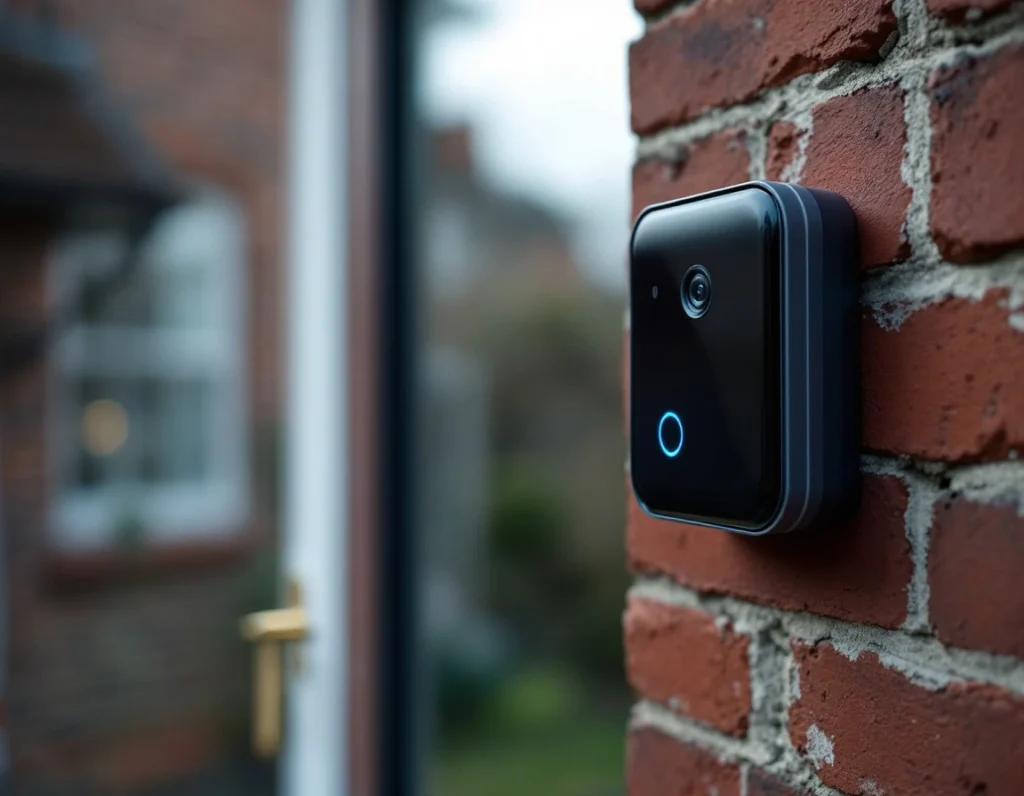
Researchers at the University of Manchester analysed police reports from 2021–2023 and found that homes equipped with visible video doorbells experienced 28% fewer attempted break-ins compared with similar houses lacking visible deterrents. The key factor was visibility. When the device's LED indicator glowed, it signalled a recorded environment, which "talked" to opportunistic thieves. In contrast, hidden cameras had negligible impact because criminals could not see them.
This has a direct practical implication: position your doorbell where it's immediately obvious to anyone approaching your door. A doorbell tucked behind a porch pillar or positioned at an awkward angle where it's hard to see from the street loses most of its deterrent value. The goal isn't just to capture footage — it's to change behaviour before anything happens.
This is also why visible alarm boxes, even dummy ones, still carry deterrent value. Criminals respond to signals, not just actual risks.
4. The Controversial Finding — Can a Doorbell Signal Affluence?
This is the finding that the marketing departments at Ring and Eufy would prefer you didn't read.
Installing a smart doorbell on your abode could actually increase your home's attractiveness to burglars, researchers from Britain's Cranfield University have said.
The argument from Cranfield's Dr Duncan Hodges: smart doorbells could become a strong cue to the relative affluence of properties. These are devices that are particularly noticeable due to their deployment on the exterior of properties and can thus increase the salience of affluence cues — experienced burglars use these cues to identify properties with potentially more high-value items, during the target selection phase.
In plain English: an expensive smart doorbell on your front door tells a criminal that the household has money, good gadgets, and is probably worth targeting — and that the camera itself is worth stealing.
How seriously should you take this? My honest assessment: for opportunistic burglars, this effect is minimal — the deterrent effect of a visible camera outweighs the affluence signal. For experienced, targeted criminals scoping expensive properties, it's worth thinking about. The solution isn't to avoid video doorbells — it's to make sure the doorbell is part of a broader visible security setup (alarm, quality locks, good lighting) rather than the only security measure present.
The Cranfield finding is also from 2021, when smart doorbells were still relatively uncommon. As they become standard across UK streets, their signal value as an affluence indicator diminishes — they're becoming as unremarkable as a car on the driveway.
5. What Burglars Think About Video Doorbells When Knocking First
One finding that comes up consistently in offender research is that many burglars knock or ring the bell before attempting a break-in — to check whether anyone is home.
Burglars often knock first to check if anyone is home. A video doorbell disrupts this tactic.
Here's why this matters: a conventional doorbell tells a burglar whether someone answers in person. A video doorbell changes that calculation entirely. Even if nobody physically comes to the door, the homeowner can respond via the app from anywhere — from work, from a café, from another country. The criminal has no way of knowing whether the person they're speaking to is standing in the hallway or sitting at a desk two miles away.
This is the aspect of video doorbells that I find most genuinely valuable from a security perspective. It decouples physical presence from the appearance of occupancy. A house that appears empty but where someone answers the doorbell immediately is a very different proposition from one where there's no response at all.
This also applies to delivery drivers, cold callers, and anyone else approaching the property. The two-way audio feature alone — regardless of the video quality or smart home integration — is a meaningful security upgrade for most UK homes.
6. Footage Is Increasingly Useful — But Not a Guaranteed Outcome
Beyond deterrence, video doorbells serve a second function: capturing footage that can be used to identify criminals after the fact.
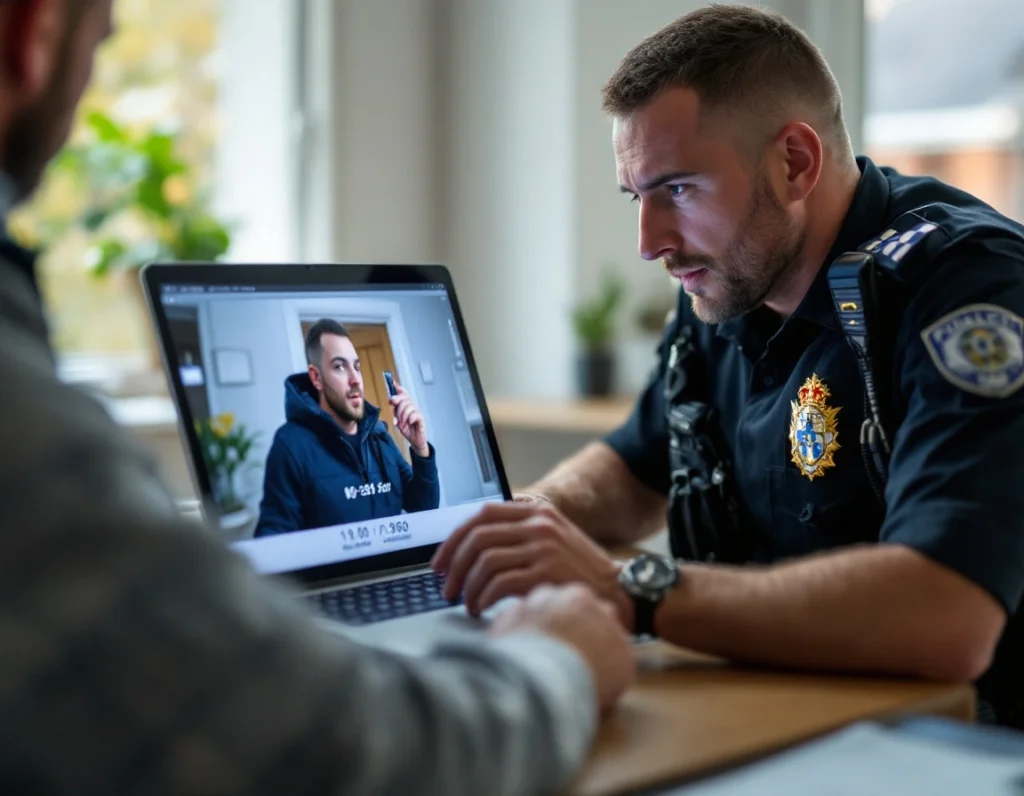
The Metropolitan Police Service proposed deploying 1,000 video doorbell devices in burglary hotspot areas across four BCU areas, working with University College London's Jill Dando Institute of Security and Crime Science to evaluate the initiative's impact on burglary reduction. The MPS has publicly encouraged residents to share doorbell footage — particularly when it captures vehicle registration plates — in connection with local crimes.
A BBC documentary series in 2025 showed how doorbell video stopped a ruthless scammer targeting a pensioner, and how doorbell detectives joined forces to put a prolific criminal behind bars.
The practical reality, from what I've seen in security work, is that footage quality and camera angle matter enormously. A 1080p doorbell positioned to capture faces clearly at the point of approach is genuinely useful to police. A camera that only captures the top of a hooded figure's head from a poor angle is much less so.
For footage to be usable:
- Position matters — capture faces, not just bodies. See our guide on where to mount a video doorbell
- Resolution matters — 1080p minimum; 2K significantly better for identification
- Storage matters — footage needs to be saved, either to cloud or local storage, to be available after the fact
- Night vision matters — a significant proportion of incidents happen after dark
7. The Honest Bottom Line — What the Evidence Actually Shows
Pulling together the research and real-world experience, here's the honest picture:
Video doorbells do deter burglars — primarily opportunistic ones, which represent the majority of UK break-ins. The effect is real and measurable, with visible doorbells associated with meaningfully fewer attempted break-ins in multiple studies.
Visibility drives most of the deterrent effect. A camera that can't be seen doesn't change burglar behaviour. Position your doorbell prominently.
The two-way audio feature is underrated. The ability to respond to a knock from anywhere in the world removes one of the most common methods burglars use to test for occupancy.
Footage has real evidential value — increasingly so as police forces develop better systems for collecting and using it. Higher resolution and good camera angle make footage significantly more useful.
A doorbell alone isn't enough. The research is clear that the strongest deterrent effect comes from layered security — visible camera, alarm, quality locks, good lighting, and unpredictable occupancy patterns working together. A video doorbell adds meaningful protection to a home that already has basic security in place. It's a much weaker proposition as the only security measure.
The affluence signal concern is real but overstated for most UK homes. As smart doorbells become commonplace across all income brackets, the signal value diminishes. The deterrent effect for opportunistic burglars outweighs the targeting risk for the vast majority of properties.
For a broader look at how video doorbells compare to other security measures, see our guide on video doorbell vs CCTV for UK homes. And if you're not yet sure which doorbell to choose, our best video doorbell UK guide covers every major model available right now.
If you want to understand more about how criminals actually assess properties before acting, our guide on how burglars case a house covers the warning signs in detail.
Frequently Asked Questions
Do burglars avoid houses with video doorbells? Most do — particularly opportunistic burglars, who represent the majority of UK break-ins. Research consistently shows that visible cameras are associated with fewer attempted break-ins. The key word is "visible" — a camera that can't be easily seen from the street has significantly less deterrent effect.
What do burglars look for when choosing a target? Opportunistic burglars look for easy targets: poor lighting, concealed entry points, signs the property is empty, weak locks, and no visible security. Experienced offenders go further — they watch routines, test responses, and assess the quality of locks and alarm systems. A visible video doorbell raises perceived risk on multiple levels.
Can burglars disable video doorbells? Some can attempt to — smashing or covering the camera, or jamming the Wi-Fi signal. Wi-Fi jamming attacks on smart doorbells have been documented in the UK. Battery-powered models that continue recording locally even when Wi-Fi is disrupted offer some protection. Wired models with local NVR storage are most resilient.
Do burglars wear disguises to avoid doorbell cameras? Experienced offenders often wear hoods, caps, or face coverings specifically to avoid camera identification. This is one reason camera angle matters — a doorbell positioned to capture faces at close range is harder to defeat than one pointing toward the street from a distance.
Is a video doorbell worth it for home security? Yes — as part of a layered security setup. A video doorbell adds meaningful deterrence, remote occupancy simulation via two-way audio, and evidential footage value. It's most effective combined with quality door locks, good lighting, and an alarm system. As a standalone measure, its effectiveness is real but limited.
What's the best video doorbell for security in the UK? For most UK homes, the Eufy Video Doorbell E340 offers the best combination of 2K resolution, dual camera (face and parcel view), no subscription, and local storage — keeping footage available even if the internet goes down. For Apple HomeKit households, the Aqara Video Doorbell G4 offers local face recognition and privacy-first storage.
As an Amazon Associate, we earn from qualifying purchases at no extra cost to you. Prices correct at time of writing and verified on Amazon UK. Some images on this site are AI-generated and may not reflect the exact appearance of the products described.