

Burglars rarely act on impulse. Before a break-in happens, most experienced criminals spend time watching, testing and assessing a property — a process known as "casing". Understanding how burglars case a house is one of the most practical things a UK homeowner can do to protect themselves.
The short answer: Burglars case a house by observing routines, testing responses, looking for weak entry points, and identifying homes with poor visibility or no security. Knowing the signs means you can spot surveillance early — and make your home a harder target before they act.
I've spent over 20 years working in physical security across London — from door security in busy venues to night patrols monitoring CCTV at commercial premises. What I've learned in that time is that most criminals follow recognisable patterns. The same instincts that make a good security officer — spotting who doesn't belong, reading body language, noticing what's out of place — are exactly what burglars rely on when selecting their next target. This guide breaks down what they're looking for, and what you can do about it.
Table of Contents
UK Burglary — The Scale of the Problem
Before getting into the tactics, it's worth understanding the numbers. According to the Office for National Statistics, there were 166,577 home burglaries recorded in England and Wales in the year ending March 2025. London alone accounted for 52,836 of those — a home burgled roughly every 15 minutes in the capital.
Around 35% of burglaries happen in daylight hours, which surprises many people. The assumption that break-ins only happen at night is wrong — and it's a dangerous assumption to make. The 3–5pm window (school run, commute, empty houses) is one of the most active periods for opportunistic burglars.
Crucially, 67% of burglars enter through the front of the property — not sneaking around the back as many assume. Your front door, front windows, and the view from the street are exactly where casing begins.
1. Repeated Unfamiliar Vehicles in the Street
One of the most reliable signs that a property is being observed is a vehicle — usually a car or van — that keeps reappearing near your home without an obvious reason.
Burglars often use vehicles to watch properties from a distance. It's inconspicuous: a person sitting in a parked car looks ordinary. What makes it suspicious is repetition — the same vehicle appearing at different times of day, or staying parked for unusually long periods without anyone getting out.
In my experience working night security patrols, vehicles that don't belong to residents are always worth noting — particularly if they're parked with a clear sightline to entry points. You don't need to be certain something is wrong to pay attention. Make a note of the make, colour and plate, and the time and date. If it keeps appearing, report it to your local police via 101.
What to do: A video doorbell with wide-angle view captures street-level activity automatically. Even if you miss it live, the recorded footage is there.
2. Strangers Walking Past Slowly — or Multiple Times
A person walking past your home once is normal. A person walking past slowly, glancing at your door or side gate, then returning an hour later — that's a pattern worth noticing.
Burglars on foot use the same approach as those in vehicles: they want to assess the property without drawing attention. They're looking at entry points (doors, windows, gates), visible security (cameras, alarm boxes, lights), and indicators of occupancy (lights on, cars in the drive, post collected).
The difference between a genuine pedestrian and someone casing a property is subtle but consistent: they slow near your house, they look at ground-floor windows and doors rather than walking purposefully, and they may double back. If you see someone loitering near your home — or a neighbour's home — without apparent reason, trust that instinct.
What to do: Motion-triggered video doorbells capture footage automatically when someone approaches your front door, even if they don't ring the bell. This is one of the reasons video doorbells deter burglars — the visible camera alone changes the risk calculation for many opportunists.
3. The "Cold Caller" Test
One of the most common casing methods in UK residential areas is the fake cold caller — someone who knocks on your door posing as a salesperson, charity collector, or tradesperson. Their real purpose is to see who answers, how quickly, and what they can observe from the doorstep.
From the doorstep, a caller can assess:
- Whether the occupant is elderly, alone, or vulnerable
- What's visible inside (electronics, handbags, keys on hooks)
- Whether a dog is present
- The type and quality of the door lock
- Whether there's an alarm panel visible in the hallway
If nobody answers, that's also information — it may mean the house is empty at a predictable time. Some cold callers will return to the same street several times in a week, working through houses systematically.
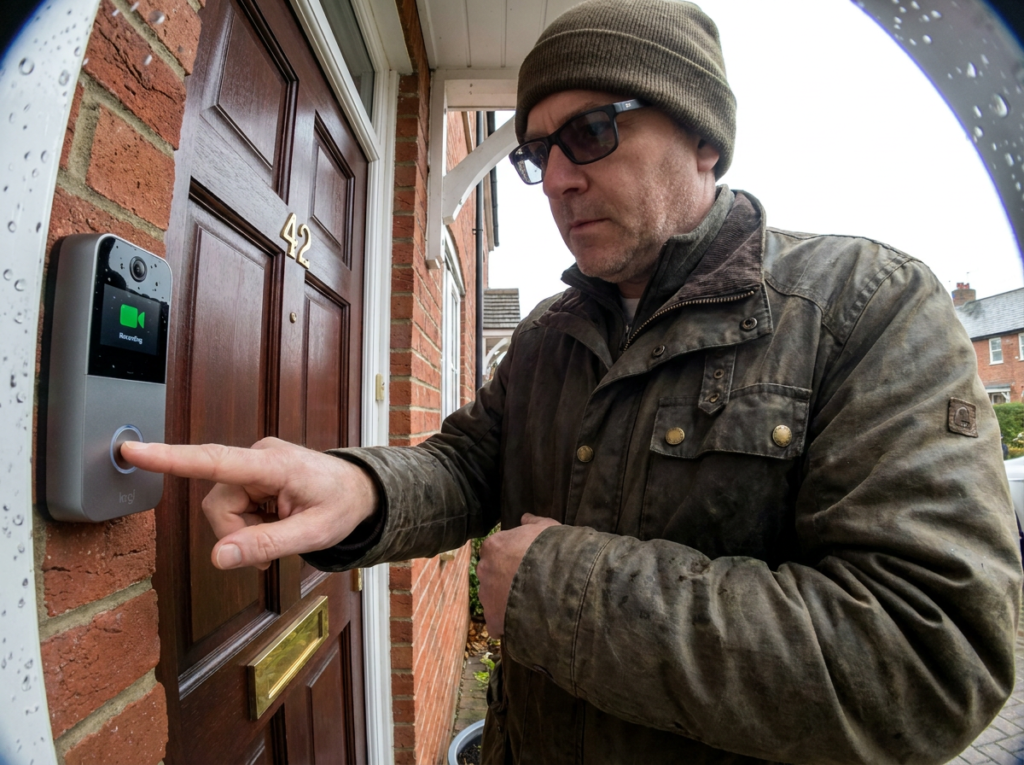
This is where a video doorbell genuinely changes the dynamic. With two-way audio, you can speak to any caller from inside the house — or remotely from your phone — without opening the door or even being home. The caller has no idea whether you're standing in the hallway or sitting in an office across London.
What to do: Never open the door to unexpected callers without checking who they are first. A video doorbell lets you screen every visitor. If someone claims to be from a utility company or local authority, ask for their ID number and call the organisation directly before letting them in.
4. How Burglars Case a House Using Your Routine
Experienced burglars don't just look at properties — they watch people. Your daily routine is one of the most valuable things they can observe.
They're noting:
- What time do you leave in the morning?
- Do you come home at a consistent time?
- Is there a day or period when the house is reliably empty?
- Do you go out every Saturday morning? Every Sunday afternoon?
- How long is the house empty between the last person leaving and the first returning?
This is why burglars often case a property over several days before acting. They want predictability. An unpredictable routine — varied leaving times, a car that's sometimes there and sometimes not, lights that turn on and off at different times — makes your home significantly less attractive.
The same applies to social media. Posting holiday photos in real time, checking into restaurants, or announcing you're away for the weekend publicly tells any follower — including anyone monitoring your profile — that your home is empty right now.
What to do: Vary your routine where possible. Use smart plugs or smart lighting on timers to simulate occupancy when you're away. Be cautious about public social media posts that reveal you're not home. For longer absences, ask a trusted neighbour to collect post and park a car on your drive.
5. Improvised Markers and "Tests"
There's a well-known internet myth about complex symbol codes that burglars supposedly leave on gateposts. The reality, confirmed by police and former offenders, is simpler — but no less worth knowing.
What burglars actually use are low-effort tests to check occupancy and response times:
Post and deliveries left uncollected — If a parcel or leaflet is left at your door and remains there for several days, it signals the property may be empty or unmonitored. Some burglars will deliberately leave a flyer in a door frame or against a gate and return to see if it's been moved.
Wheelie bins left out — Bins left on the street days after collection suggest no one is checking the property.
Small physical markers — A twig or stone placed against a gate, a rubber band on a door handle. These are low-tech but effective — if they're still there 24 hours later, the property likely hasn't been accessed.
Throwing something at a window — A small stone tapped against a window or door at night can tell a burglar a lot: does a light come on? Does a dog bark? How quickly does someone respond?
None of these are sophisticated operations. But they work precisely because most people don't notice them.
What to do: Collect post promptly. Bring bins in on collection day. A video doorbell with motion detection will alert you to anyone approaching your door, including those who don't ring the bell — which is exactly when these tests happen.
6. Checking Entry Points and Escape Routes
When a burglar moves beyond general observation and starts physically assessing a property, they're looking at specific things:
Door and lock quality — UPVC doors with standard locks are particularly vulnerable to lock snapping, which remains one of the most common forced entry methods in the UK. A burglar can often tell lock quality from the street — the style of handle, the age of the door, whether a deadbolt is fitted.
Side gates and rear access — Properties with unlocked side gates or easy access to the rear garden are significantly higher risk. If a burglar can reach your back door without being visible from the street, that's a major advantage for them. From the front, a scout may not even need to touch your property — they just need to confirm there's a path around the side.
Window security — Ground-floor windows without visible locks or secondary security. Sash windows are particularly vulnerable. An open or tilted window is an obvious signal.
Darkness and concealment — Overgrown hedges, no porch light, a recessed doorway. Anything that lets someone work at your door or window without being visible from the street is useful to a burglar and should be considered a vulnerability.
What to do: Upgrade door locks to British Standard (BS3621). Fit a padlock to side gates. Trim hedges and shrubs near entry points. Install a porch light with a motion sensor. For the front door, a video doorbell is one of the strongest deterrents available — it removes the concealment advantage entirely.
7. The Dog and Alarm Check
Two things make experienced burglars hesitate more than almost anything else: dogs and alarm systems. As a result, casing often includes trying to establish whether either is present.
Dogs — A barking dog is both an alarm and a deterrent. Burglars will often ring the bell or knock, or make a noise near the property, specifically to see if a dog responds. A large dog is a serious deterrent. Even a small dog that barks loudly is a significant obstacle — noise draws attention, and attention is the last thing a burglar wants. A "Beware of the Dog" sign, even without a dog, can create uncertainty.
Alarms — A visible alarm box on the front of a property — particularly a reputable brand — is taken seriously by experienced burglars. They'll look for signs that the alarm is active (a blinking LED, no signs of weathering or neglect). A dummy alarm box that looks obviously fake or is poorly maintained is quickly identified and ignored.
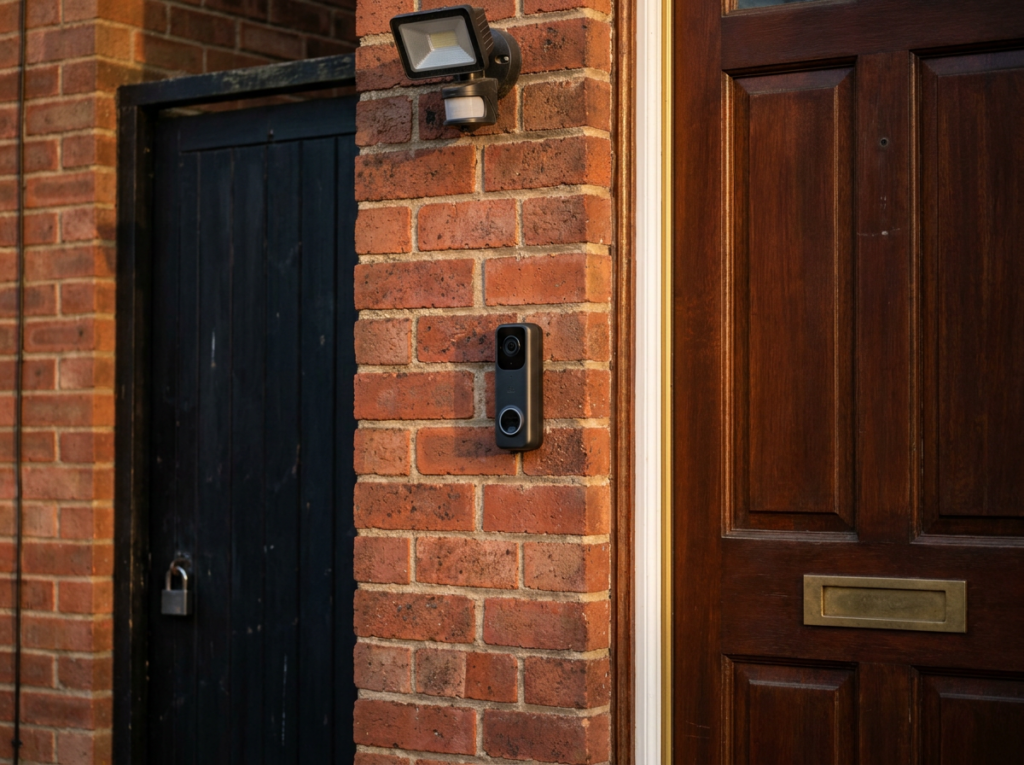
Video doorbells — Increasingly, a visible video doorbell is being treated similarly to an alarm box. It signals that the property is monitored, that footage is being recorded, and that any approach will be captured. Properties with clearly visible cameras are consistently passed over in favour of easier targets.
What to do: If you have a dog, let it be known — a sign or simply the sound of barking when someone approaches. Ensure your alarm is serviced and the box is clean and clearly visible. Position a video doorbell where it's immediately obvious to anyone approaching, rather than tucked away where it's harder to see.
What Burglars Are Really Weighing Up
Every casing decision comes down to a simple risk calculation: reward versus risk.
Reward: What's in the property? Is it worth the effort? Risk: How likely am I to be caught or identified?
Anything that increases the perceived risk — visible cameras, a dog, an alarm, lights on, neighbours who notice — reduces the attractiveness of your property relative to the next one on the street.
Burglars, particularly experienced ones, are not looking for a challenge. They're looking for the easiest option available. A house on your street that has no visible security, a predictable empty schedule, an unlit front door, and a side gate with no padlock will almost always be chosen before a house with a visible doorbell camera, a dog, and a well-lit entrance.
This is why video doorbells genuinely deter crime — not because they physically stop entry, but because they shift the risk calculation. The camera is visible. The recording is automatic. The homeowner gets an alert. All of that raises the perceived risk significantly.
How to Make Your Home a Harder Target — Practical Checklist
Based on everything above, here's what actually makes a difference:
Visible deterrents (the most important):
- Video doorbell — visible, recording, motion-triggered alerts
- Alarm box — clean, well-positioned, reputable brand
- Porch and driveway lighting with motion sensors
- Side gate with padlock
Reduce opportunities:
- BS3621 door lock (or equivalent) — particularly important for UPVC doors
- Window locks on all ground-floor windows
- No concealment near entry points — trim hedges and shrubs
- Collect post daily; bring bins in promptly
Break the pattern:
- Vary your routine where possible
- Use smart lighting to simulate occupancy
- Ask neighbours to keep an eye on the property when away
- Don't announce absences publicly on social media
Know the signs:
- Note unfamiliar vehicles that keep reappearing
- Report persistent loitering to police via 101
- Trust your instincts — if something feels wrong, it usually is
For more on how video doorbells fit into a wider home security setup, see our guide on video doorbell vs CCTV for UK homes. If you've already experienced a theft, our guide on what to do if your video doorbell is stolen covers the immediate steps.
Frequently Asked Questions
How do burglars choose which house to target? Most burglars look for the easiest option available — a property with poor visibility, no visible security, predictable empty periods, and easy access. They weigh perceived reward (what's inside) against perceived risk (chance of being caught). Visible cameras, dogs, alarms, and neighbours who notice significantly raise that risk.
What does "casing a house" mean? Casing means observing and assessing a property before deciding whether to target it. This can involve watching from a vehicle, posing as a cold caller, testing occupancy with small markers or knocks, and checking entry points and escape routes. It can happen over hours, days, or even weeks.
What are the signs that someone is casing your house? Key signs include: an unfamiliar vehicle appearing repeatedly near your home; strangers walking past slowly or multiple times; unexpected cold callers who ask unusual questions; items left at your door (flyers, rubber bands) that seem to test whether you're home; and anyone spending time near your side gate or rear access without obvious reason.
Do burglars ring the doorbell before breaking in? Yes, frequently. Ringing the bell or knocking is one of the most common occupancy tests. If someone answers, they'll pose as a cold caller. If nobody answers, they've confirmed the house is empty. A video doorbell means you can respond from anywhere — the caller has no way of knowing whether you're home or not.
Does a video doorbell actually stop burglars? Evidence consistently shows that visible security cameras deter opportunistic criminals. A video doorbell is particularly effective because it's positioned at the primary entry point (67% of UK break-ins occur through the front), it's clearly visible, it records automatically, and it alerts you in real time. No security measure stops a determined professional, but most burglars are opportunists — and visible cameras push them toward easier targets.
What time of day are most UK burglaries? Contrary to popular belief, around 35% of UK burglaries happen in daylight hours, with the 3–5pm window particularly active. The majority (60%) do occur in darkness, with midnight to 6am accounting for around 33% of incidents. The front of the property is targeted in 67% of cases.