
The short answer: You've caught parcel thief on camera — now act fast. Download the footage immediately, report to the retailer first (fastest route to a refund), then report to police via 101 or online. Get a crime reference number. Don't post the footage on social media without legal advice. Here's exactly what to do, step by step.
| Details | |
|---|---|
| Step 1 | Download footage immediately — camera roll + cloud + email |
| Step 2 | Contact the retailer first — replacement or refund |
| Step 3 | Report to police — online, 101, or in person |
| Step 4 | Submit footage to police digital evidence portal |
| Step 5 | Alert neighbours — description only, no face |
| Step 6 | Check GDPR before posting publicly |
| Step 7 | Upgrade your setup to prevent next time |
Table of Contents
You've Got Parcel Theft Footage. Now What?
I work in security in East London. I've seen the footage. A figure walks up the path, glances at the camera, reaches for the parcel, and walks away. Calm. Unhurried. Completely confident they'll face no consequences.
Most of the time, they're right. Despite a surge in the number of culprits being caught on doorbell cameras, 88% of parcel theft cases in one county were closed without a suspect even being identified. Six charges from nearly a thousand reports.
That's the honest reality. But that doesn't mean doing nothing is the answer. Your footage — if you act quickly and correctly — can contribute to a pattern that gets a repeat offender caught. It protects your insurance claim. It helps your neighbour who had the same thing happen last week. And it might, directly, lead to an arrest.
Here's what to do, in the right order.
Step 1 — Download the Footage Right Now
Before anything else. Before you call the retailer. Before you phone the police. Download the footage.
Why this is urgent: Cloud-based doorbells (Ring, Nest) automatically delete footage after a set period — typically 30–60 days depending on your subscription. If your subscription lapses, footage may delete immediately. Local storage (Eufy E340, Eufy S330) keeps footage until you delete it, but the SD card can fill up and overwrite older events.
How to download from each platform:
Ring: Open the Ring app → Event History → find the clip → tap the share icon → Save to Device. The full clip saves to your camera roll.
Google Nest: Open Google Home → Doorbell → Camera → find the event → tap Download. Saves as MP4.
Eufy (E340, S330, C30): Open eufy Security app → Live View → Playback → find the clip → tap the download icon. Also accessible via the microSD card directly if you have local storage.
Aqara: Open Aqara Home app → Playback → find the event → export via the share icon.
Save in multiple places: Camera roll + cloud backup (Google Photos, iCloud) + email it to yourself. You want this footage in at least three locations before you do anything else.
What to keep: The full clip, not just the moment of theft. Police want to see the approach, the theft itself, and the departure — including which direction the thief came from and left toward. If your doorbell captured a vehicle, the registration plate is extremely valuable.
Step 2 — Contact the Retailer First
This is the fastest route to a resolution, and most people do it last.
Amazon, ASOS, John Lewis, Currys, and virtually every major UK retailer will replace or refund a stolen parcel without requiring a police reference number. Their process is faster than the police's, and they're motivated to maintain customer satisfaction.
What to do:
- Log into your account and find the order
- Select "Where's my order" or "Report a problem"
- Describe the theft — doorbell footage confirming the parcel was delivered and then stolen
- Most will offer a replacement or refund within 24–48 hours
If the retailer refuses: You may have additional options under UK consumer law. Credit card purchases between £100 and £30,000 qualify for Section 75 protection — the card company shares liability with the retailer. Debit card purchases may be covered by chargeback rights. Contact your card provider if the retailer won't help.
Keep the crime reference number for larger claims. If you're claiming on home insurance for a high-value item, your insurer will require a police report.
Step 3 — Report to the Police
It is estimated that only 1 in 333 parcel thefts are reported to the police, which makes it easy to underestimate the real scale of this problem.
That's why reporting matters — even when you suspect nothing will immediately happen. Your report adds to local crime data. If three households on your street report thefts with footage of the same person in the same week, that's a pattern police can act on. Individually, each report looks like a minor theft. Together, they build a case.
How to report:
Online (fastest and recommended): Most UK police forces have online reporting tools. For England and Wales, find your local force at police.uk and use their online report form. The Metropolitan Police has its own system at met.police.uk.
By phone: Call 101 (non-emergency line) to report. Not 999 — parcel theft is not an emergency. You'll wait on hold, but you'll be able to speak directly to someone who can log the report immediately.
In person: Visit your local police station. Less convenient, but useful if you want to hand over footage on a physical device.
What to have ready:
- Your name and address
- Date and approximate time of the theft
- Description of the thief: clothing, height, build, direction of travel
- Vehicle details if captured (make, colour, registration plate if visible)
- Value of the stolen item
- Your doorbell model (so they understand the footage format)
The crime reference number: You'll receive this at the end of your report. Keep it. You need it for insurance claims, and it proves you reported the crime. If the same thief is caught later, your report may be linked to the investigation.
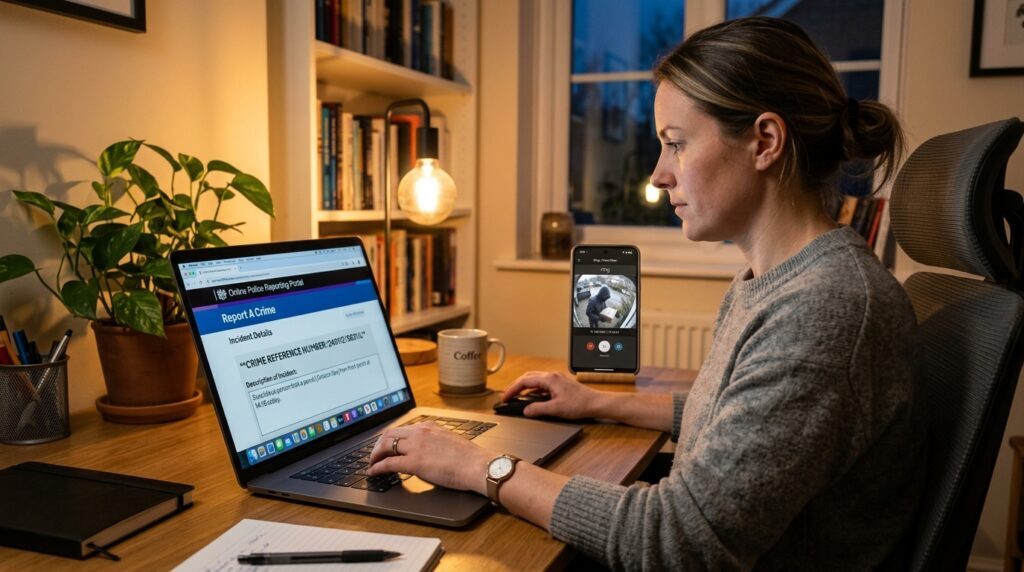
Step 4 — Submit Your Footage to Police
Reporting the crime verbally is step one. Submitting the footage is step two — and most people stop at step one.
How to submit footage:
Many UK police forces now have dedicated portals for submitting digital evidence. The Metropolitan Police uses the MFESS (Media File Evidence Submission System). Other forces use similar systems or accept footage via email.
When you submit:
- Submit the full clip, not a screenshot
- Include the date and time stamp if visible
- Note the doorbell model and any app-specific metadata
- If the footage shows a vehicle, zoom in on the plate if possible and include the enhanced screenshot separately
Check your footage quality first. 2K or 4K footage from an Eufy E340 or Ring Wired Pro is significantly more useful than 1080p in low light. If the image is dark or blurry, run it through a free video enhancement tool (like Topaz Video AI's trial) to improve clarity before submission.
Step 5 — Alert Your Neighbours — the Right Way
You have footage of a parcel thief. Your neighbours may have had the same experience last week and not known what to do. Sharing information quickly can prevent the next theft.
Nextdoor: The most effective platform for hyper-local crime alerts. Post the incident with the date, time, and a description of the thief. Do not post their face — see the GDPR note below.
Ring Neighbours: If you use Ring, the Neighbours feature alerts nearby Ring users to security events in the area. Report the incident through the app.
Local Facebook groups: Most UK neighbourhoods have a local Facebook group where crime alerts are regularly shared. A factual post — "parcel stolen from [street] on [date] at [time], reported to police, crime reference [number], please be vigilant" — is appropriate and helpful.
WhatsApp neighbourhood groups: If your street has one, a quick message covering the facts is appropriate.
Step 6 — The GDPR Question — Can You Share the Footage?
This is where people get into trouble. You have clear footage of someone's face. You want to post it on Facebook or X and let the community identify them. Before you do — stop.
Sharing footage publicly is a legal grey area in the UK.
Under UK GDPR, you are a data controller of footage your camera captures. Sharing footage that identifies an individual — even a criminal — requires a lawful basis. In most cases, posting someone's face on social media without their consent doesn't have a clear lawful basis, even if they committed theft.
The practical risk: If you post footage publicly and the identified person faces harassment, discrimination, or harm — even if they're guilty — you could face a civil claim or ICO complaint.
What you can legally do:
- Share footage with police (lawful basis: crime prevention and investigation)
- Share a description of the thief and their clothing — without a face
- Share footage in a closed community group where it won't be publicly searchable
What to avoid:
- Posting face images on public social media with the caption "do you know this person?"
- Tagging local news outlets with identifiable footage
- Sharing footage that captures your neighbours or other innocent parties
If the police tell you they're not pursuing the case and you want to share footage publicly, seek advice from Citizens Advice or a solicitor first. See our full GDPR guide for the broader context.
Step 7 — Make Sure It Doesn't Happen Again
You've done everything right. Now use what happened to improve your setup.
Review what your footage missed. Was the thief's face clear? Could you read a vehicle plate? Did the theft happen in a blind spot? The answers tell you what to upgrade.
Upgrade your doorbell if needed. If you captured a blurry silhouette rather than an identifiable face, it's time to consider a higher resolution model. The Eufy E340 (dual cameras, 2K, colour night vision) and Ring Wired Pro (Retinal 4K, 10x zoom) both provide footage that police can actually work with.
Consider the Eufy S330 for active deterrence. The Eufy S330 has Delivery Guard — when a parcel is detected, it monitors continuously. If anyone approaches, a voice alert broadcasts automatically. It doesn't just record the theft — it tries to prevent it. Read our full S330 review.
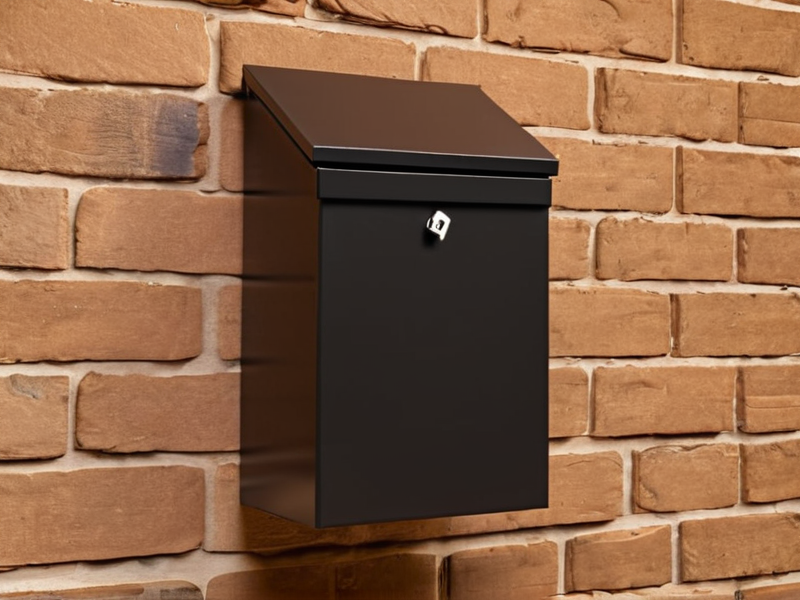
Add a secure parcel box. Recording theft is useful. Preventing it is better. A locked parcel box mounted near your front door means couriers leave parcels inside it — only you have the key. See our complete parcel theft prevention guide for all the options.
Tell your neighbours what doorbell you have. If they know you have 2K footage of the approach to your house, they may think twice before stealing from you again — and you may be the camera that catches the thief the next time they strike on your street.
What to Expect from the Police — Honestly
After 20 years in UK security, I'll be straight with you: for a single parcel theft, the probability of prosecution is low. Police are stretched, the courts are backed up, and doorbell footage — while useful — rarely identifies an unknown offender without additional investigation.
But "low probability" isn't zero. Several UK parcel thieves have been caught and prosecuted specifically because:
- Multiple neighbours reported the same person
- A vehicle plate from one theft was matched to other incidents
- Doorbell footage was combined with council CCTV to track a route
- A repeat offender's face was recognised by a police officer from existing records
Your report is one piece of a puzzle that may take months to complete. That doesn't make it pointless. It makes it essential.
The Metropolitan Police explicitly recommends reviewing any CCTV, doorbell footage or dashcam opportunities as one of the key inquiries officers carry out when a crime is reported.
Your footage matters. File it properly and let the police do their job.
Quick Reference Checklist
- ✅ Download footage immediately — camera roll + cloud + email
- ✅ Contact the retailer for replacement or refund
- ✅ Report to police — online, 101, or in person
- ✅ Get and save your crime reference number
- ✅ Submit footage to police via their digital evidence portal
- ✅ Alert neighbours via Nextdoor or local groups — description only, no face
- ✅ Check GDPR before posting footage publicly
- ✅ Review your setup — upgrade if footage quality was inadequate
Frequently Asked Questions
I've caught a parcel thief on camera — will police do anything? They will log the report and the footage becomes part of the official record. Prosecution for a single incident is unlikely, but your report contributes to a pattern that may lead to an arrest if the same person strikes again. The Metropolitan Police recommends reviewing CCTV and doorbell footage as one of the key inquiries when a crime is reported.
Can I post doorbell footage of a parcel thief on social media? UK GDPR makes this legally risky. You can share a description and clothing details. Sharing identifiable face images on public platforms without legal basis could expose you to a civil claim or ICO complaint. Share footage with police, and use closed community groups rather than public posts.
How do I get a refund if my parcel was stolen? Contact the retailer directly first — most will replace or refund without a police reference number. For high-value items over £100 paid by credit card, Section 75 protection may apply. Keep your crime reference number for insurance claims.
How long do I have to report a stolen parcel? Most retailers have a reporting window — typically 30 days. Report as quickly as possible. Police reports have no strict deadline, but earlier is better for evidence quality and investigation.
What if the police say they can't investigate? Ask for a crime reference number regardless — you need it for insurance. If you believe the refusal is unreasonable, contact your local Police and Crime Commissioner's office. Alternatively, if you have footage of a vehicle, report the plate to the DVLA via the police.
What is the best doorbell to catch parcel thieves? For footage quality: Eufy E340 (2K, dual cameras, colour night vision) or Ring Wired Pro (4K, 10x zoom). For active deterrence that may prevent the theft in the first place: Eufy S330 with Delivery Guard voice alert. See our parcel delivery doorbell guide for the full comparison.
Last updated: June 2026. This article provides general information only and does not constitute legal advice. For specific legal questions about GDPR or footage sharing, seek advice from Citizens Advice or a qualified solicitor. As an Amazon Associate, we earn from qualifying purchases at no extra cost to you.