

The short answer: Video doorbells are legal in the UK — but the moment your camera captures footage beyond your property boundary, Video Doorbell GDPR UK and the Data Protection Act 2018 kick in. Get it wrong and you could face fines, a civil lawsuit from your neighbour, or an ICO enforcement notice. Here's exactly what the law requires.
Table of Contents
Video Doorbell GDPR UK — What the Law Actually Says
After 20 years working in UK security, I've seen homeowners install cameras with the best of intentions — and end up in a legal dispute with a neighbour. The law around video doorbells in the UK isn't complicated, but most people don't know it exists until something goes wrong.
Two pieces of legislation govern how you use a video doorbell in the UK:
- UK GDPR — the UK's version of the General Data Protection Regulation, which came into effect after Brexit
- Data Protection Act 2018 (DPA 2018) — which enacts and supplements UK GDPR
The good news: if your doorbell only captures footage within your own property boundary — your front door, doorstep, driveway, or garden — data protection law does not apply to you. You are in the clear.
The moment your camera captures anything beyond that boundary — a public pavement, a neighbour's garden, a shared hallway — you become what the law calls a data controller. That comes with legal obligations.
The One Rule That Catches Most UK Homeowners
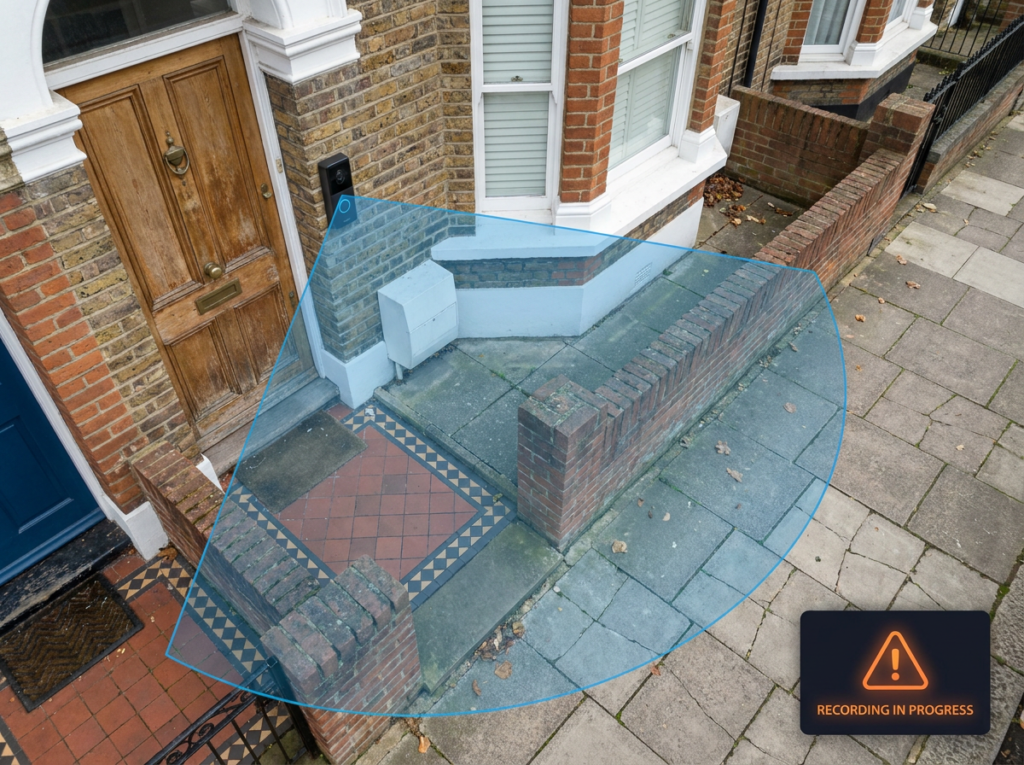
Your video doorbell's field of view is the issue. Most doorbells have a 150°–180° wide-angle lens. Installed on a typical UK terraced house, it almost certainly captures part of the public pavement — and that's enough to trigger UK GDPR.
This isn't a grey area. The ICO (Information Commissioner's Office) is explicit: if your camera records people outside your property boundary, GDPR applies to you.
The landmark case is Fairhurst v Woodard (2021). A homeowner in Oxfordshire installed a Ring Video Doorbell and additional cameras. His neighbour took him to court. The judge ruled that the doorbell captured footage of the neighbour's home and surrounding area — and that the audio recording feature (which couldn't be turned off at the time) breached both the Data Protection Act and UK GDPR. The homeowner faced damages and legal costs.
That case established a precedent. Video doorbells are not exempt from data protection law.
Your Legal Obligations as a Data Controller
If your doorbell captures footage beyond your property boundary, here's what UK GDPR requires:
1. Legitimate purpose You must have a lawful reason for recording. Home security is accepted as a legitimate purpose — but the recording must be proportionate. A 180° camera pointing down the entire street is harder to justify than one focused on your front door.
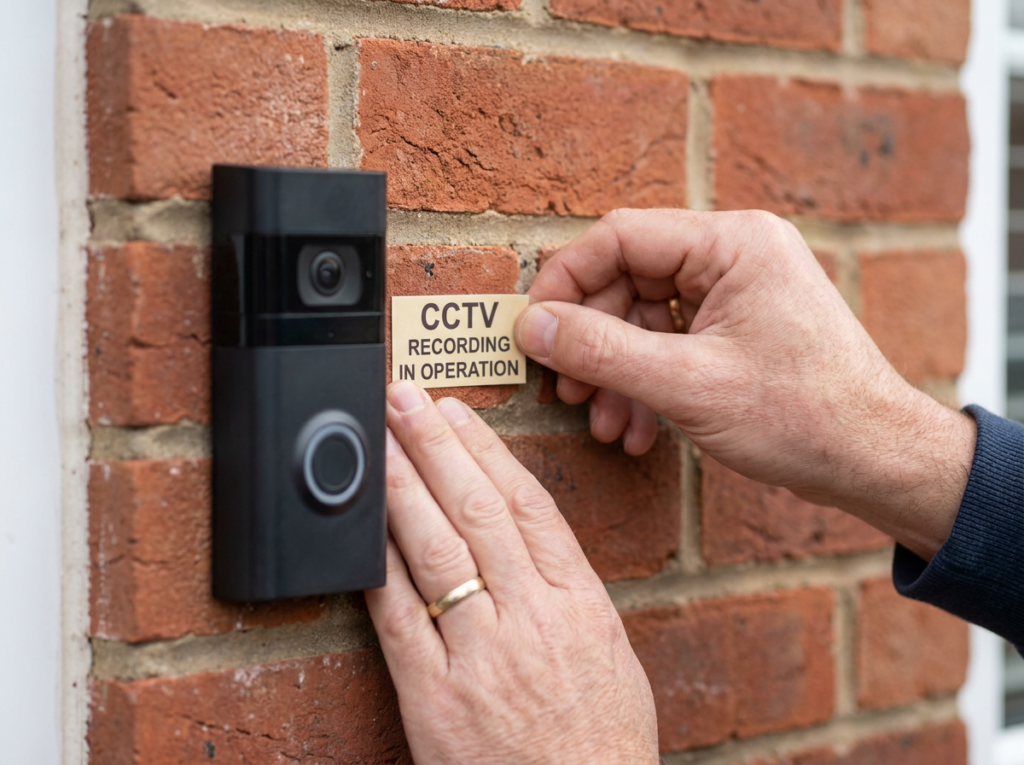
2. Signage You must display a notice informing people they are being recorded. A small sticker near the doorbell saying "Video recording in operation for home security purposes" is sufficient. Without it, neighbours can claim they had no idea they were being recorded.
3. Data minimisation Record only what you need. Don't keep footage indefinitely — UK GDPR requires you to delete personal data when it's no longer needed. Most doorbells auto-delete after 30–180 days depending on your plan. Check your settings.
4. Data security Footage must be stored securely. This is where your choice of doorbell matters. Ring and Google Nest store footage on US-based servers — accessible to law enforcement under US law. Eufy E340 stores footage locally on the device. Aqara G400 uses HomeKit Secure Video — end-to-end encrypted in your iCloud account. From a GDPR data security standpoint, local storage is significantly lower risk.
5. Subject access requests If a neighbour asks to see footage in which they appear, you must respond within one month. You can redact footage of other parties before providing it.
Audio Recording — The Hidden Risk
Most UK homeowners don't realise their doorbell records audio as well as video. Audio is treated as higher-risk personal data under UK GDPR.
If your doorbell's two-way audio is recording ambient sound from a public area — conversations on the pavement, neighbours talking in their garden — that significantly increases your legal exposure.
Practical advice: Check your doorbell settings and disable audio recording if you don't need it, or ensure it only activates when you actively use the two-way talk feature. The Ring Battery Doorbell Plus allows you to disable audio recording in the app. Most other brands do too — check the privacy settings.
Flats and Communal Areas — Extra Caution Required
If you live in a flat or apartment, the rules are stricter. Recording footage of a communal hallway, stairwell, or shared entrance almost certainly captures other residents — who have not consented to being recorded.
In communal spaces, you need a stronger justification for recording, and ideally written consent from your landlord or management company. See our guide for video doorbells in rented properties and our guide for flats for more detail.
What Happens If You Get It Wrong?
The ICO has enforcement powers under UK GDPR:
- Fines — up to £17.5 million or 4% of global turnover for organisations. For individual homeowners, fines are smaller but real.
- Enforcement notices — ordering you to change how your camera is used or positioned.
- Civil action — neighbours can sue for damages if your camera is found to be intrusive or in breach of data protection law. Fairhurst v Woodard is the precedent.
The ICO's general approach to domestic CCTV is proportionate — they're not sending inspectors to check every Ring doorbell in the country. But if a neighbour complains formally, the ICO will investigate.
Practical Checklist — Stay on the Right Side of UK GDPR
- ✅ Angle your doorbell to minimise capture of public areas where possible
- ✅ Display a visible recording notice near the doorbell
- ✅ Set automatic footage deletion — don't store recordings indefinitely
- ✅ Disable audio recording if you don't actively use two-way talk
- ✅ Use local storage or end-to-end encrypted cloud where possible
- ✅ If asked, be prepared to provide footage to a neighbour who appears in it
- ✅ In flats or communal areas — get written permission before installing
Which Doorbells Are Best for GDPR Compliance?
From a data protection standpoint, local storage wins every time:
Best for privacy: Aqara G400 — HomeKit Secure Video, end-to-end encrypted, processed on your Apple devices. Not even Aqara can access your footage.
Best overall with local storage: Eufy Video Doorbell E340 — 8GB built-in local storage, records without internet, no footage on third-party servers.
Budget with local storage: TP-Link Tapo D230S1 — microSD storage up to 512GB in the hub, no cloud required.
Higher risk: Ring and Google Nest — footage stored on US servers, accessible to US law enforcement without a UK warrant. Legal under UK GDPR if used correctly, but a higher data security risk.
Frequently Asked Questions
Is it legal to have a video doorbell in the UK? Yes — video doorbells are legal. If the camera only captures your own property, data protection law doesn't apply. If it captures beyond your boundary, UK GDPR obligations apply — but that doesn't make it illegal, it just means you have responsibilities.
Can my neighbour complain about my video doorbell? Yes. If your doorbell captures footage of their property or person without adequate notice, they can complain to the ICO or take civil action. The Fairhurst v Woodard case (2021) established that this is a real legal risk.
Do I need to put up a sign for my video doorbell? If your doorbell captures footage beyond your property boundary, yes — a visible notice is required under UK GDPR. A small sticker near the doorbell is sufficient.
How long can I keep doorbell footage? UK GDPR requires you to delete personal data when it's no longer needed. For home security, 30 days is a widely accepted retention period. Most cloud plans auto-delete within this timeframe.
Can police access my doorbell footage? UK police can request footage with a legitimate investigation reason. If your footage is stored with a US-based provider (Ring, Nest), US law enforcement may also be able to access it under US law — without a UK warrant. Local storage eliminates this risk.
Does GDPR apply to audio recording from my doorbell? Yes — audio is treated as higher-risk personal data. If your doorbell records ambient audio from public areas, your GDPR obligations are more significant. Consider disabling audio recording if you don't use two-way talk.