

The short answer: Video doorbell home insurance UK — the honest answer is that a doorbell alone is unlikely to reduce your premium. But as part of a broader security setup, it can. Here's what UK insurers actually reward.
What UK Insurers Actually Look For
After 20 years in UK security, I've seen homeowners install video doorbells expecting insurance discounts that never materialise. The reality is more complicated — and more interesting.
UK home insurers assess risk, not gadgets. A video doorbell is a deterrent and an evidence-gathering tool. But insurers want to know: does your home have approved locks, a monitored alarm system, and physical security measures? A camera alone doesn't change the lock on your door.
That said, security technology does influence premiums — just not always in the way you'd expect.
The Direct Answer — Does a Video Doorbell Lower Your Premium?
In most cases: not directly, and not automatically.
None of the major UK insurers — Aviva, Direct Line, Churchill, Admiral, LV= — publish a specific discount for video doorbells alone. What they do offer are discounts for:
- Approved alarm systems — BS EN 50131 or NSI/SSAIB monitored alarms
- High-security locks — BS3621 five-lever mortice or equivalent
- CCTV systems — professional grade, properly installed
- Smart home security packages — some insurers now ask about these at quote stage
Installing approved locks, alarms, or CCTV can reduce premiums by up to 20%. The key word is "approved" — a consumer video doorbell from Amazon is not the same as a professionally installed CCTV system in an insurer's eyes. Costco
The exception: Some newer insurers and smart home policies do ask whether you have a video doorbell at quote stage, and it can contribute to a lower risk score — particularly when combined with other security measures.
What Actually Reduces Your Home Insurance Premium
Here's what UK insurers consistently reward:
1. Approved alarm systems A monitored burglar alarm — particularly one connected to a 24/7 response centre — is the single biggest security discount available. Discounts of 5–15% are common. Your video doorbell doesn't replace this.
2. BS3621 locks Five-lever mortice locks on external doors are required by many policies as standard. Without them, some insurers won't pay out on a burglary claim at all. Check your policy documents.
3. Neighbourhood Watch membership Many UK insurers offer small discounts for registered Neighbourhood Watch areas. It's worth checking when you get a quote.
4. No claims history The most reliable way to keep premiums down. A video doorbell that helps you avoid a claim — by deterring a theft or providing evidence for a successful claim — has indirect financial value.
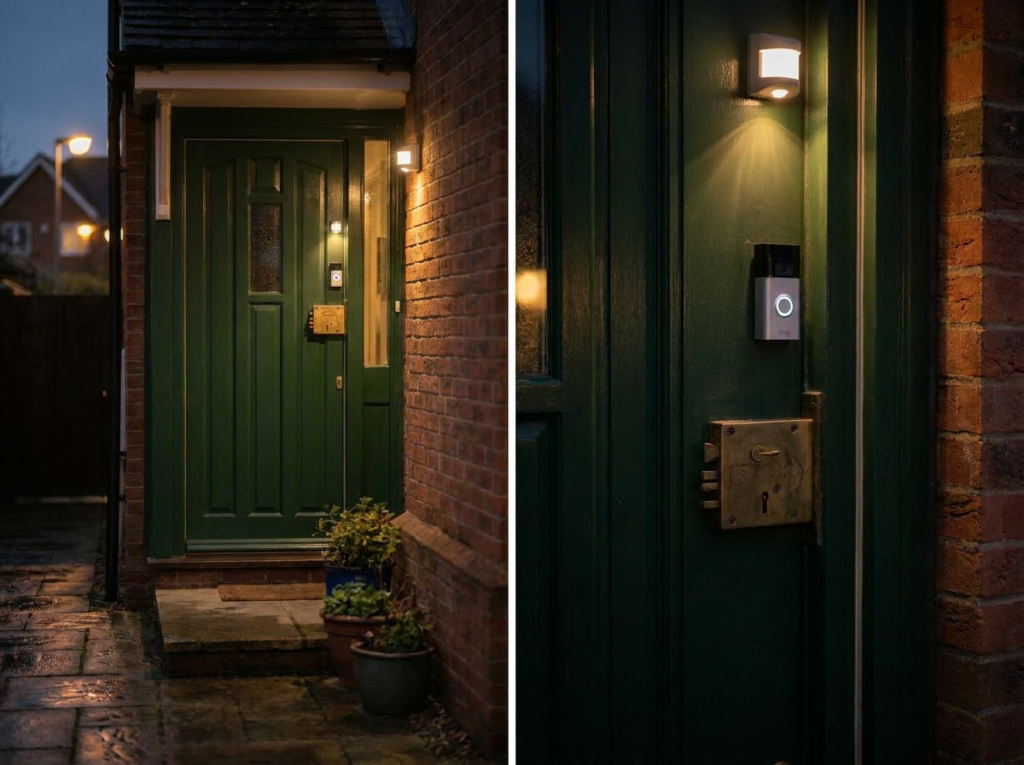
5. Combined security setup Where a video doorbell earns its keep is as part of a system. Doorbell camera + motion-activated lights + approved alarm + good locks = a home that presents as low risk. Some insurers now ask about smart home tech at quote stage and factor it in.
The Indirect Value — Where a Video Doorbell Really Pays
Even if it doesn't cut your premium directly, a video doorbell has real financial value in three ways:
Deterrence reduces the risk of a claim Households with visible cameras or smart entry systems are much less likely to be targeted by burglars. No claim means no excess to pay, no premium increase at renewal, and no payout stress. Android Police
Footage supports successful claims If a theft does occur, doorbell footage showing the incident, the thief's appearance, and the time of entry significantly strengthens your claim. Insurers are less likely to dispute a claim backed by clear video evidence.
The Eufy Video Doorbell E340 stores 8GB of footage locally — it records even when your internet is down. The Aqara G400 stores footage in end-to-end encrypted iCloud. Both provide reliable evidence without depending on a subscription being active when you need it most.
Parcel theft prevention 4.83 million UK homes fell victim to parcel theft last year. Contents insurance often covers stolen parcels — but repeated small claims push your premium up and eventually make you uninsurable. A doorbell that stops parcel theft saves you from making those claims in the first place. See our full parcel theft prevention guide for more. Ring
How to Actually Get a Lower Premium
Step 1 — Ring your insurer and ask Don't assume. Call your insurer directly and ask: "Do you offer any discount for video doorbells, smart home security, or CCTV?" Some do — but it's not always advertised. The answer may surprise you.
Step 2 — Declare your security measures accurately When getting a quote, most comparison sites ask about security measures. Answer accurately — including your video doorbell, alarm, and lock types. Under-declaring security can void a claim.
Step 3 — Consider a smart home insurer A small number of UK insurers now specialise in smart home policies. Sky Protect, for example, includes 30 days of video storage for doorbell and security camera clips as part of the insurance policy itself — bundling the security tech with the cover. These products are still niche but growing. Alex Reviews Tech
Step 4 — Invest in the things insurers actually reward If lower premiums are your goal, a video doorbell is step one — not the whole answer. Pair it with a BS3621 lock on your front door and, if your premium warrants it, a monitored alarm system. That combination is what insurers consistently reward.
Which Video Doorbells Are Best for Insurance Purposes?
From an insurer's perspective, what matters is reliable footage retention. A doorbell that only keeps clips for 24 hours without a subscription is useless as evidence if you don't notice a claim event immediately.
Best for reliable evidence:
- Eufy Video Doorbell E340 — 8GB local storage, records without internet, no subscription
- Aqara G400 — HomeKit Secure Video, encrypted iCloud storage, no subscription beyond iCloud+
- TP-Link Tapo D230S1 — microSD up to 512GB, no subscription
Less reliable for claims:
- Ring and Google Nest — footage requires an active subscription. If your subscription lapses, you have no stored footage. This is a real risk for insurance purposes.
See our full comparison of no-subscription doorbells for more.
My Verdict
A video doorbell is worth buying for home security — but don't buy it expecting a big insurance discount. The honest answer is that UK insurers reward proven, physical security measures above smart gadgets.
What a video doorbell genuinely does: deters opportunistic crime, provides footage for successful claims, prevents parcel theft claims, and contributes to a lower-risk security profile when combined with proper locks and an alarm.
That indirect financial value — over five years of avoided claims and stable premiums — is likely worth more than any direct discount. It's just harder to put a number on.
Frequently Asked Questions
Does a Ring doorbell reduce home insurance in the UK? Not automatically — no major UK insurer publishes a specific Ring doorbell discount. However, declaring a video doorbell at quote stage can contribute to a lower risk profile, particularly when combined with other security measures.
What security measures do UK insurers actually discount? Approved alarm systems (NSI/SSAIB monitored), BS3621 five-lever locks, and professional CCTV are most commonly rewarded. Some insurers now ask about smart home tech. Always declare all security measures when getting a quote.
Will a video doorbell help if I make a claim? Yes — significantly. Clear footage of an incident, a thief, or forced entry strengthens your claim and makes it harder for an insurer to dispute. Local storage (not subscription-dependent) is most reliable. See our no-subscription doorbell guide.
Can a video doorbell void my home insurance? No — but GDPR non-compliance could create separate legal liability. And if your locks don't meet your policy requirements, a burglary claim may be rejected regardless of what your doorbell recorded.
What is the best home security setup to reduce insurance premiums? BS3621 front and back door locks + a monitored alarm system + a video doorbell with local storage. That combination covers deterrence, physical security, and evidence — the three things that matter most to UK insurers.
Do video doorbells deter burglars? Yes — particularly opportunistic thieves. See our detailed analysis: do video doorbells deter burglars?