

Quick answer: Ring wins on video quality, battery life, and subscription value. Nest wins on smart detection, ecosystem integration, and free video history. The right choice depends entirely on which smart home ecosystem you're already in.
Read on for the full breakdown — including the things most comparison guides won't tell you.
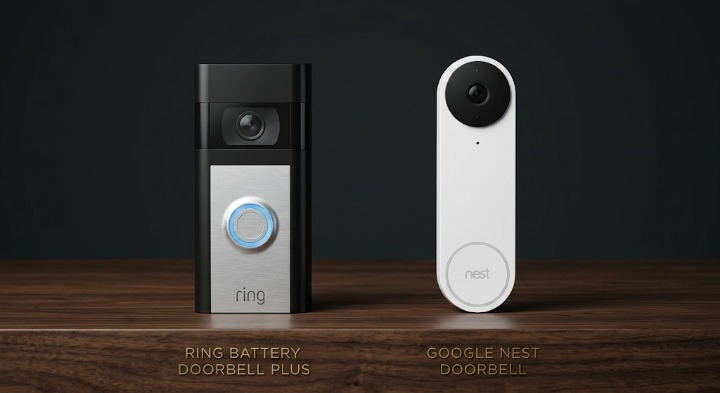
Why This Comparison Matters
Ring and Nest are the two most recognised video doorbell brands in the UK. Walk down any street in London and you'll spot one of them on almost every other door. But they're built around very different philosophies, and choosing the wrong one can mean years of frustration.
I've been working in UK security for over 20 years. I've seen both brands installed in hundreds of homes, and I've watched how real people actually use them — not how the marketing says they will.
Here's the honest comparison.
At a Glance
| Ring Battery Doorbell Plus | Google Nest Doorbell (Battery) | |
|---|---|---|
| Price | ~£120–£140 | ~£150–£180 |
| Resolution | 1536×1536 (head-to-toe) | 960×1280 |
| Field of view | 150° | 145° |
| Battery life | not stated | 2–2.5 months |
| Free video history | None | 3 hours |
| Subscription | £4.99/month (Ring Protect) | £6/month (Nest Aware) |
| Works with | Alexa, Google Home | Google Home only |
| Motion detection | Radar + PIR | AI-based |
| Night vision | Colour | Colour |
| Local storage | ❌ No | ❌ No |
| Wired option | ✅ Yes | ✅ Yes |
Video Quality: Ring Wins
Ring uses a 1536×1536 square aspect camera with a 150° field of view — significantly better for security coverage of the larger area in front of the house, and offering higher video quality than Google, particularly in daylight. Google uses a 4:5 960×1280 camera, which provides good general coverage of the porch area but limits detail at longer ranges.
In practice, this means Ring captures a wider, more detailed image — particularly useful for identifying faces and reading partial number plates from further away.
Winner: Ring
Motion Detection: Nest Wins
Both doorbells offer good reliability in terms of detecting motion correctly, but Ring significantly outperforms in terms of wake time and capture distance. However, what Ring wins in speed, Nest wins in intelligence.
The Nest Doorbell offers AI-powered detection that distinguishes between people, animals, packages, and vehicles — all included free, without a subscription. Ring offers similar features but gates them behind the Ring Protect subscription.
For a busy front door in an urban area like East London, where you're getting notifications for foxes, delivery vans, and pedestrians at all hours, smart filtering matters enormously.
Winner: Nest (for accuracy and free AI features)
Battery Life: Ring Wins Easily
Ring clearly leads in battery life: 3–6 months versus 2–2.5 months for Nest. This is significant — it means charging twice per year instead of five to six times.
For most UK homeowners, climbing a ladder to remove and recharge a doorbell is a hassle. The difference between twice a year and six times a year is not trivial. Nest's battery also requires removing the entire unit to charge — there's no removable battery option.
Winner: Ring
Notifications: Ring Wins
Ring rich notifications are incredibly fast, averaging 2.3 seconds even with thumbnails included — twice the speed of Google's basic text notifications, and up to four times faster than waiting for Google to deliver a thumbnail.
In a security context, speed matters. If someone is at your door and you want to see who it is before they leave, a 2-second notification versus an 8-second one is a real difference.
Winner: Ring
Subscriptions: It's Complicated
This is where most comparison guides mislead you. Neither Ring nor Nest is truly usable without a subscription — but the details matter.
Ring without subscription:
- Live view only
- No recorded clips
- No video history
- Motion alerts with no image
Essentially, Ring without Ring Protect Basic (£4.99/month) is a very expensive doorbell that tells you someone is outside but doesn't show you who it was.
Nest without subscription:
- 3 hours of free video history ✅
- Person, animal, package, vehicle detection free ✅
- Live view ✅
Nest is genuinely usable without a subscription for many households. If you only want to know when a person visits and occasionally review a clip from the last few hours, Nest works fine for free.
5-year total cost:
- Ring: ~£130 (hardware) + £300 (subscription) = £430
- Nest: ~£160 (hardware) + £0–£360 (optional subscription) = £160–£520
Winner: Nest (free tier is actually useful)
Smart Home Ecosystem: Depends on You
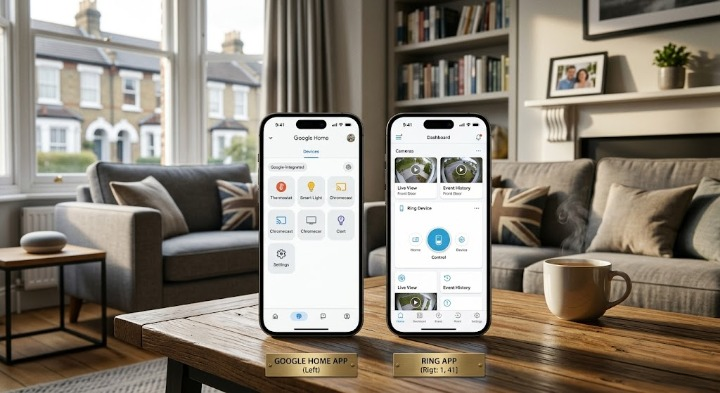
Ring works with Alexa and Echo Show for live view, and integrates with Ring Alarm. Google Home app unifies the doorbell with thermostats and speakers into one interface, though live view is slower at 3–5 seconds.
- Already using Amazon Echo? → Ring is the obvious choice
- Already using Google Nest Hub or Google Assistant? → Nest integrates seamlessly
- Using Apple HomeKit? → Neither. Look at Arlo instead.
- No smart home at all? → Ring's app is more focused and responsive for security use
Winner: Depends on your ecosystem
Privacy: Nest Has the Edge
Both Ring (Amazon) and Nest (Google) have faced scrutiny over data sharing. Ring has previously shared footage with law enforcement without user consent, a policy that has since been updated following public pressure.
Neither brand is ideal from a privacy standpoint — both process significant amounts of data through cloud servers. If privacy is a priority, consider Eufy (local storage, no subscription) instead.
Winner: Neither — consider Eufy for privacy
My Verdict: Which Should You Buy?
Buy Ring if:
- You use Amazon Alexa or Echo devices
- Battery life is important to you
- You want the fastest notifications
- You need wider field of view coverage
Buy Nest if:
- You use Google Home, Nest Hub, or Android
- You don't want to pay a monthly subscription
- Smart detection (person vs animal vs package) matters to you
- You prefer a cleaner, more minimal design
Buy neither if:
- Privacy is a priority → consider Eufy E340 (local storage, no subscription)
- You're on a tight budget → consider TP-Link Tapo D230S1 (under £60)
- You want Apple HomeKit → consider Arlo Essential 2K
Frequently Asked Questions
Can Ring and Nest work together? No — they're separate ecosystems. You can use both brands in the same home, but they won't share data or work through the same app.
Which is easier to install in a UK home without existing wiring? Both are equally straightforward for battery installation — screw the mount, attach the doorbell, connect to Wi-Fi. Ring has a slightly more ergonomic mounting bracket according to most installers.
Do Ring and Nest work with existing UK chimes? Ring works with most traditional UK mechanical chimes. Nest does not have its own chime — you'll need a Nest Mini or Google Home speaker to hear the doorbell inside.
Which is better for a rented property? Both battery versions work well in rentals — no wiring required. Ring's longer battery life means less frequent removal for charging, which is preferable if you can't easily drill new holes.
Is Ring owned by Amazon? Yes — Ring was acquired by Amazon in 2018. Nest is owned by Google (Alphabet). Both companies have significant commercial interest in the data your doorbell collects.
As an Amazon Associate, we earn from qualifying purchases at no extra cost to you. Prices correct at time of writing and verified on Amazon UK.